
 Green
GreenThe power decides the site
At Bright & Green, the grid connection, battery storage, renewable generation and waste heat are not part of the building services; they are the starting point of development. This page sets out that approach and the requirements the German Energy Efficiency Act places on new data centres.
Electrical capacity as the limiting factor
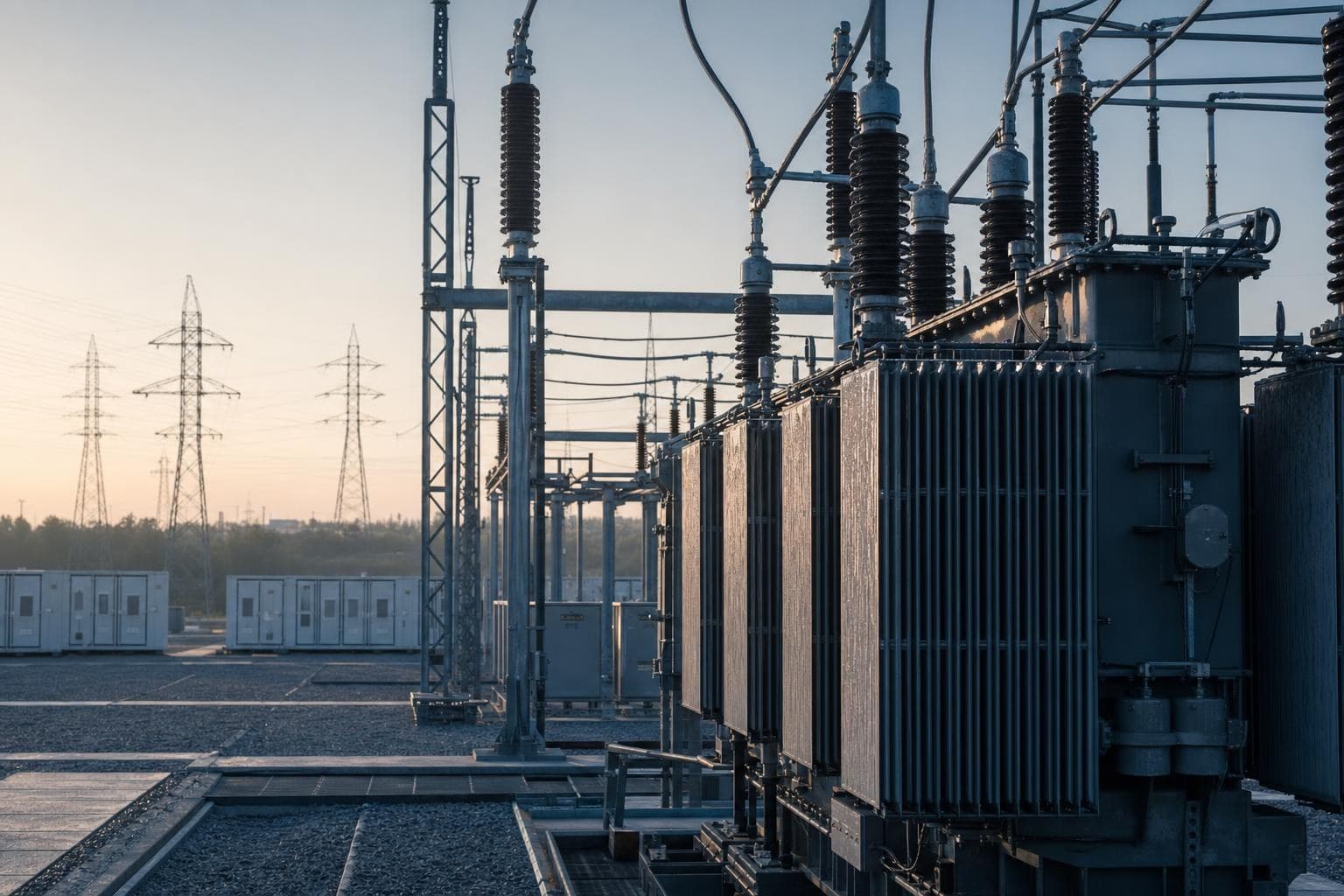
A data centre requires electrical power around the clock, at a level only the high- or extra-high-voltage grid can deliver. Free capacity at suitable substations is scarce, because industry, electrification and generation compete for the same networks. Grid operators allocate connections through regulated procedures, and capacity once allocated is not available a second time.
A building can be planned and a plot can be purchased, whereas a grid connection can only be secured. It is the binding connection commitment that turns a plot into a site. The question of energy therefore stands at the beginning of every development at Bright & Green.
The grid connection procedure in four steps
The procedure leads in four steps, with the responsible grid operator, to the binding connection commitment.
Grid connection request
The connection request is the formal application to the responsible transmission or distribution system operator, stating connection capacity, site and timetable. It opens the procedure and secures the position in the order of processing.
Grid compatibility assessment
The grid operator examines whether and where the load can be accommodated – at the existing substation, after its expansion, or through a new one.
Connection commitment and agreement
The binding commitment sets the connection point, the connection capacity, the date and the costs, and becomes legally binding with the grid connection agreement. From this point onwards the site can be valued and financed.
Substation
Depending on the connection capacity and the grid situation, an existing substation is expanded or a dedicated one is built. It forms part of the project and of the land requirement, and is planned in from the outset.
Functions of battery storage at a data centre
The storage performs four functions that make better use of the connection capacity and safeguard operation.
Peak load
The storage covers load peaks. The grid connection can be sized for the average load, not the highest.
Bridging
During a grid outage, the storage carries the load until the backup power takes over – without interruption, and without starting the diesel generators for short disturbances.
Grid services
At times of low load, the storage provides balancing power to the grid and earns revenue that eases the cost of operation.
Connection optimisation
A limited connection capacity yields more usable IT capacity. In many cases the storage determines whether a site is viable at all.
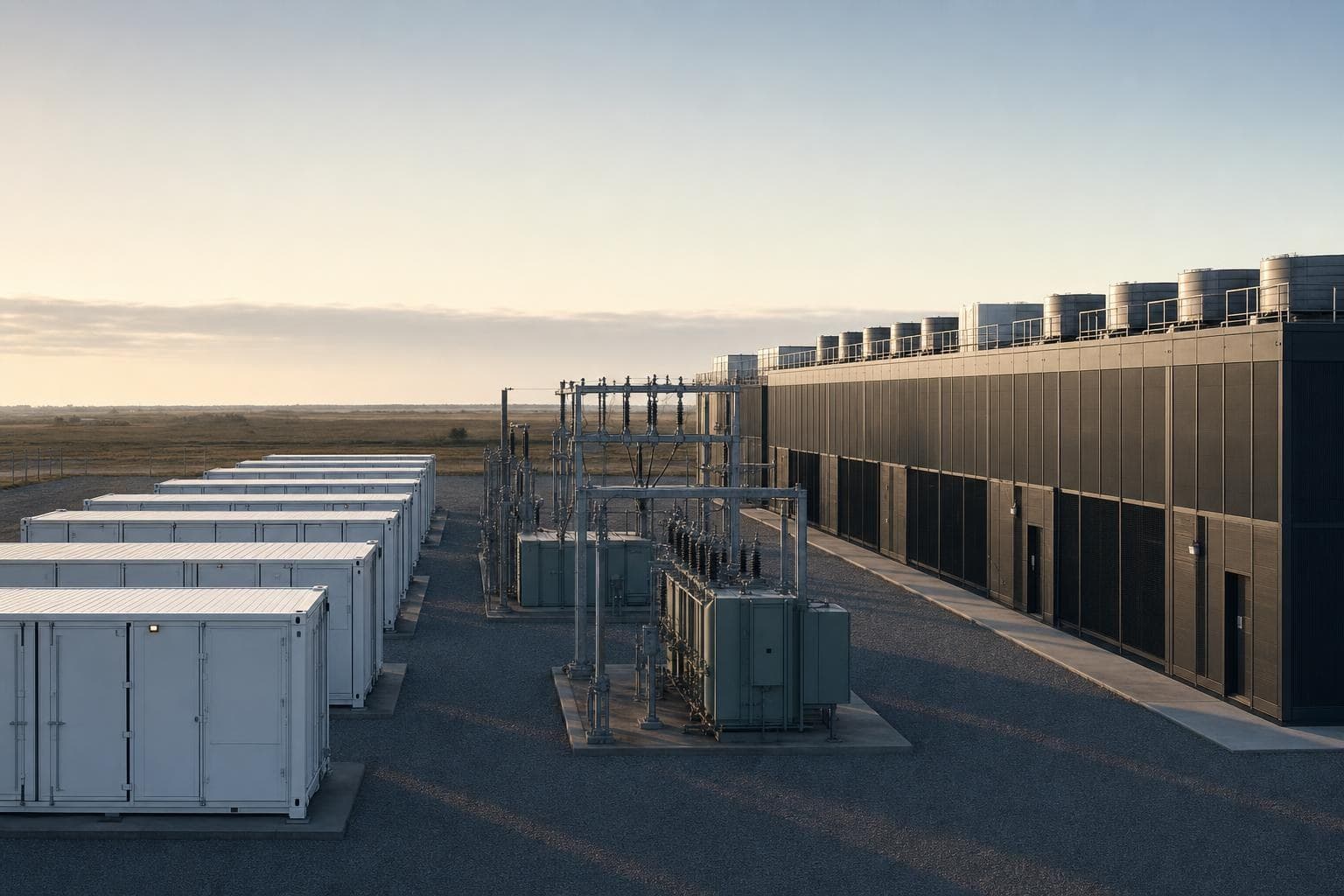
Bright & Green develops, builds and operates battery storage itself, both stand-alone on the grid and at the data centre. Storage at the data centre is sized together with the grid connection rather than added afterwards.
Meeting the electricity demand
Data centre operators have had to cover 50 per cent of their electricity consumption with renewable electricity on a balance-sheet basis since 1 January 2024, and must cover 100 per cent from 1 January 2027 (Section 11(5) EnEfG, the German Energy Efficiency Act). This requirement is legally binding.
Bright & Green covers the supply through long-term power purchase agreements with generators and, where the site permits, through its own generation on site or nearby. Solar and storage projects are the core business of the company: we can judge what volume a generator is able to deliver, how a supply agreement has to be structured, and how generation, storage and load combine into a sound connection concept.
Use of the waste heat
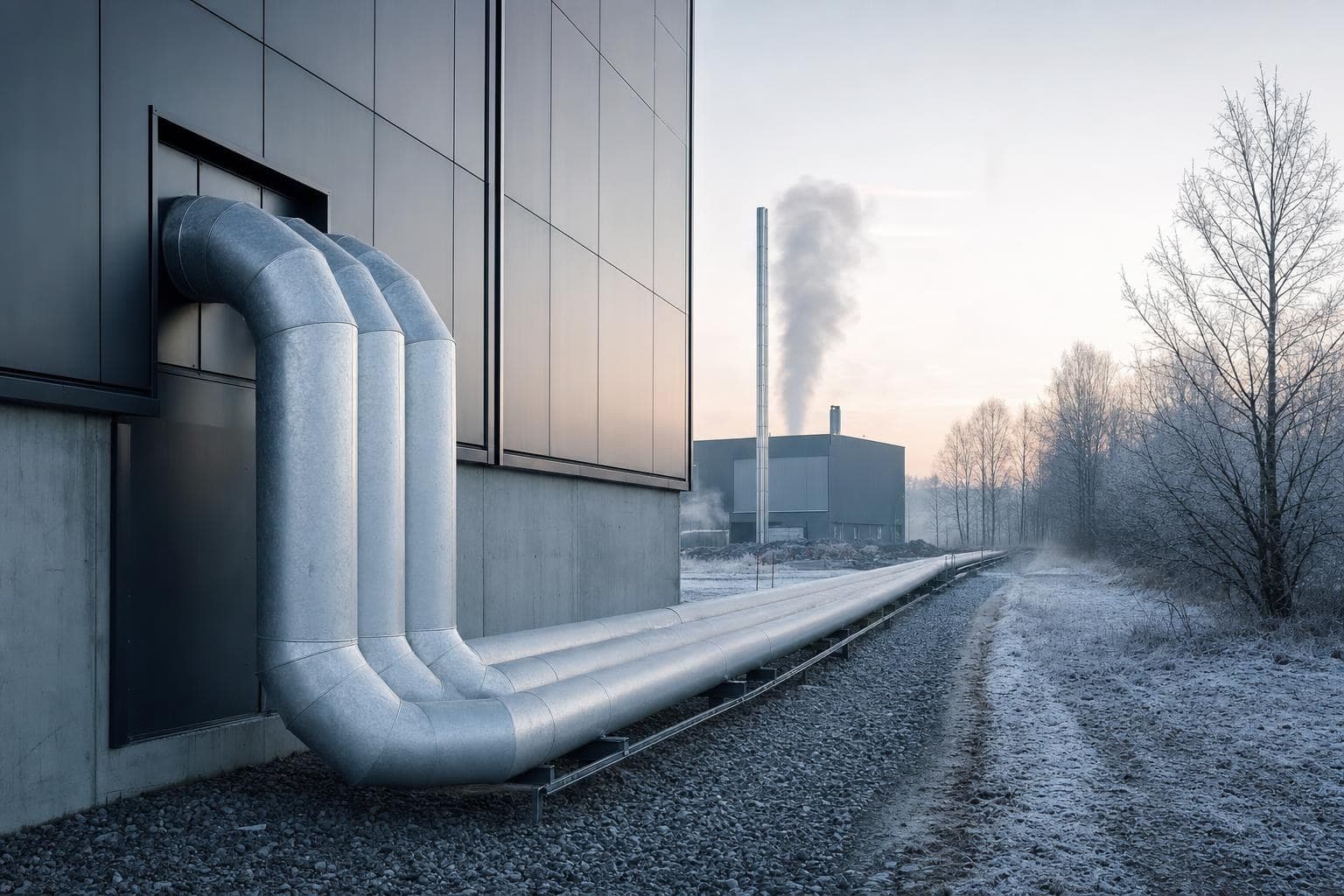
Almost all of a data centre's electrical power is converted into heat. It arises at a low temperature and can be raised to district-heating level with heat pumps. Potential customers are the heating networks of municipalities and municipal utilities, industrial plants with a demand for process heat, and new housing areas in the vicinity.
Data centres that start operating on or after 1 July 2026 must reuse at least 10 per cent of their energy; for operation starting on or after 1 July 2027 it is 15 per cent, and from 1 July 2028 it is 20 per cent (Section 11(2) EnEfG). The requirement is waived where an agreement with a nearby municipality or district heating operator is in place under which it can be met within ten years (Section 11(3) EnEfG).
A waste-heat customer is therefore a site criterion, and the municipality is a partner in the discussion from the outset rather than only once the building stands.
Requirements of the German Energy Efficiency Act for new data centres
The source is the text of the Act at gesetze-im-internet.de; the section is given with each point. This is an overview, not legal advice.
- Scope
- A data centre, within the meaning of the Act, is a facility with a non-redundant rated electrical connection capacity of 300 kilowatts or more.
- Section 3 no. 24 EnEfG
- Power usage effectiveness (PUE)
- Data centres that start operating on or after 1 July 2026 must reach a power usage effectiveness of 1.2 or less – as an annual average, no later than two years after commissioning. Existing facilities must reach 1.5 from 1 July 2027 and 1.3 from 1 July 2030.
- Section 11(1) and (2) EnEfG
- Reused energy
- At least 10 per cent for operation starting on or after 1 July 2026, at least 15 per cent from 1 July 2027, and at least 20 per cent from 1 July 2028. An agreement with a municipality or district heating operator under which the requirement can be met within ten years replaces the proof.
- Section 11(2) and (3) EnEfG
- Renewable electricity
- 50 per cent on a balance-sheet basis since 1 January 2024 and 100 per cent from 1 January 2027.
- Section 11(5) EnEfG
- Energy or environmental management system
- Mandatory for operators since 1 July 2025. From a non-redundant rated connection capacity of 1 megawatt, the system has had to be validated or certified since 1 January 2026.
- Section 12(1) and (3) EnEfG
- Information duty
- Every year by 31 March, operators publish information on their data centre for the preceding calendar year and submit it to the federal government.
- Section 13(1) EnEfG
Bright & Green plans every data centre so that these requirements are met in operation, and as the operator the company carries responsibility for compliance itself.
The origin of our energy expertise
For almost twenty years, Bright & Green has developed, built and operated solar plants and battery storage, including over 1,500 solar plants in sizes from 0.5 to 100 MWp in Germany and the Netherlands. Grid operators, connection procedures, power purchase agreements and storage operation form the daily business of the company.
- 0+
- years of experience
- 0+
- solar plants built
- 0.5–100 MWp
- project sizes
- 0
- markets
energy projects in Germany and the Netherlands
on roofs and open land
from a commercial roof to a solar park
Germany and the Netherlands